The King dramatically transforms the Picture Gallery
5 Rembrandts and 7 Rubens are a few of the 120 masterpieces on view at Buckingham Palace
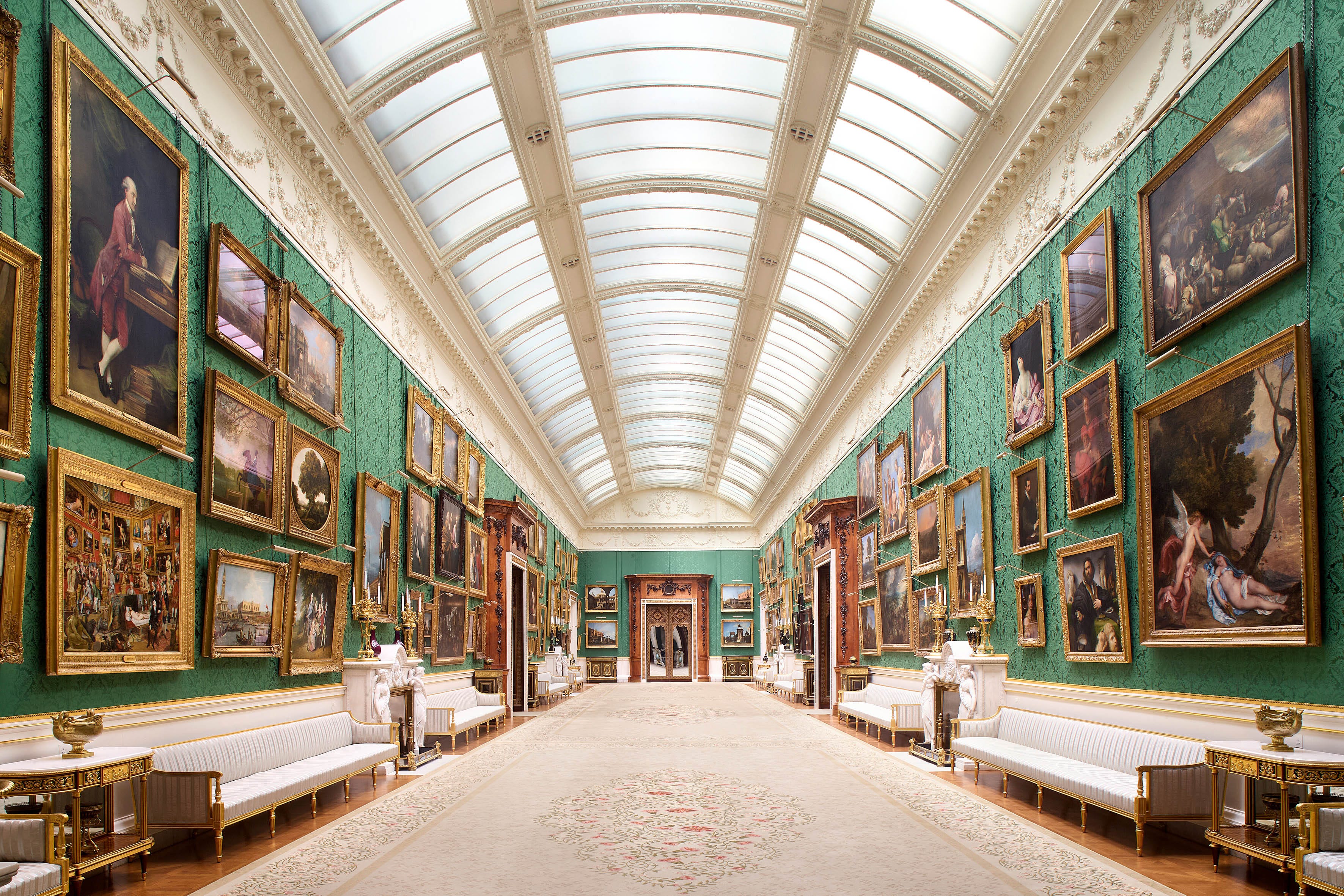
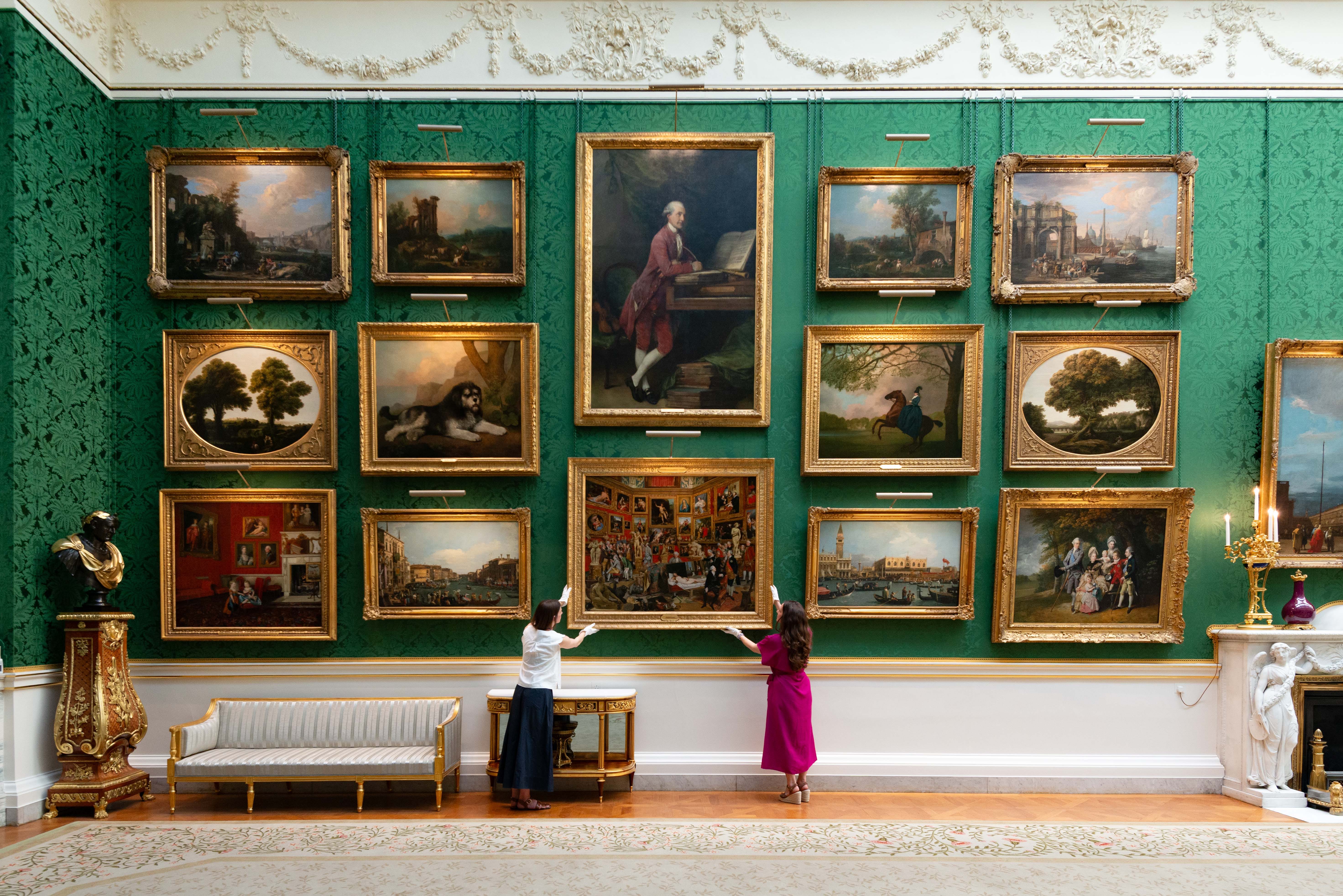
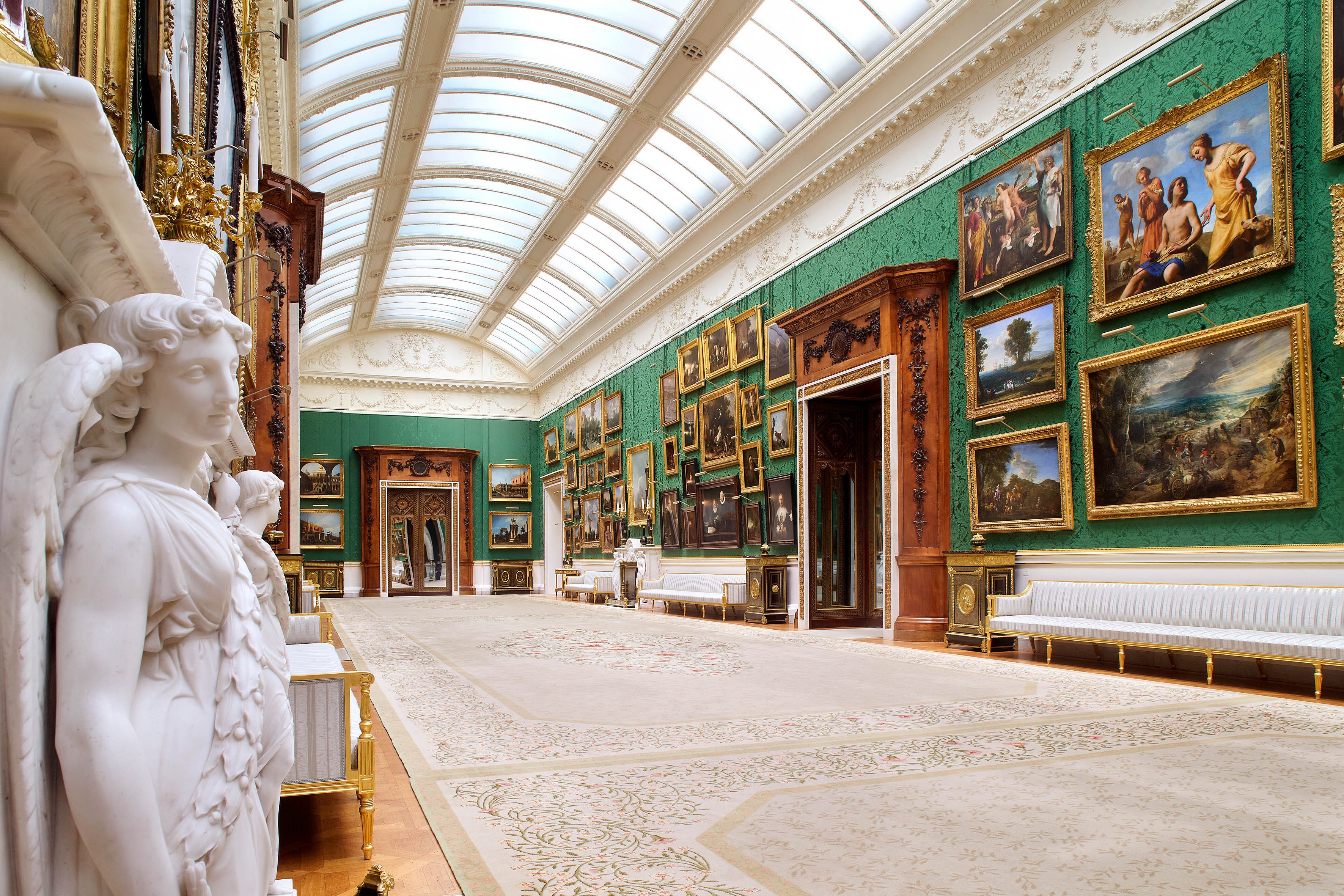
In what curators are calling a “once-in-a-generation re-display” the Picture Gallery of Buckingham Palace has been transformed. New silk wall coverings, LED lighting, and a doubling of the number of paintings – from 63 to 120 – on display have reintroduced drama into one of the most important rooms of the palace, which opened this week to the public for its summer tourist season.
At the urging of King Charles III, who prefers walls filled with paintings and other treasurers, Anna Reynolds, Surveyor of the King’s Pictures, picked 120 of the best items from the Royal Collection. Given the collection is one of the best in the world, it’s fair to say that narrowing the selection would have been a difficult challenge.
King Charles has been steadily putting his mark on royal residences, both inside and out. He’s has mazes created on the grounds of Balmoral and Sandringham, two personal residences. He’s also had a formerly private garden at Windsor Castle transformed into the newly-named Venus Garden, which is also open to the public this summer.

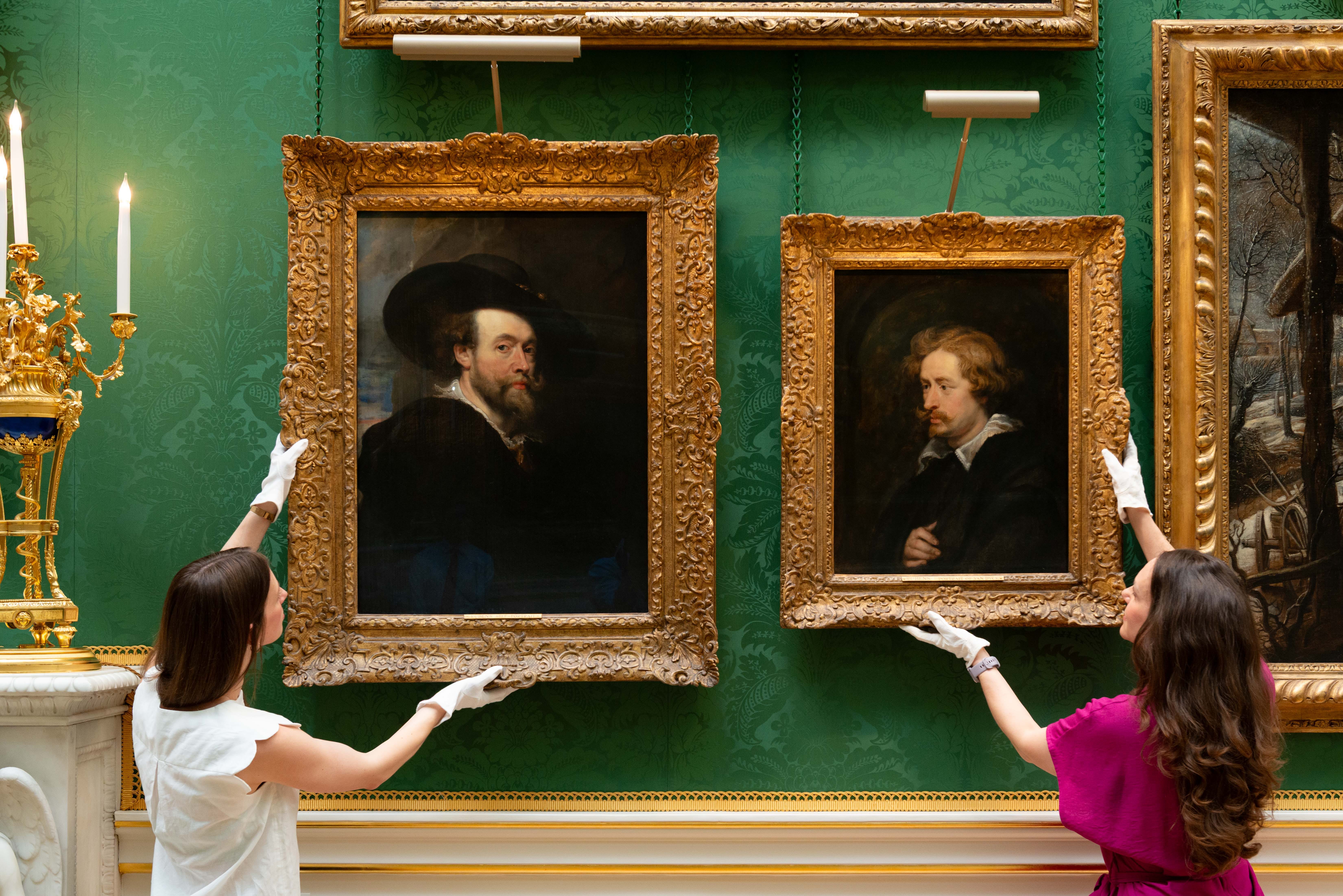
Now, the monarch’s preferences can be seen in the dramatic transformation of the Picture Gallery. The change in wall fabric to an emerald green silk damask, and return to a dense hanging of paintings “continues the longstanding tradition of renovations and re-hangs in the Picture Gallery that have commonly taken place following a change of reign,” explains the palace.
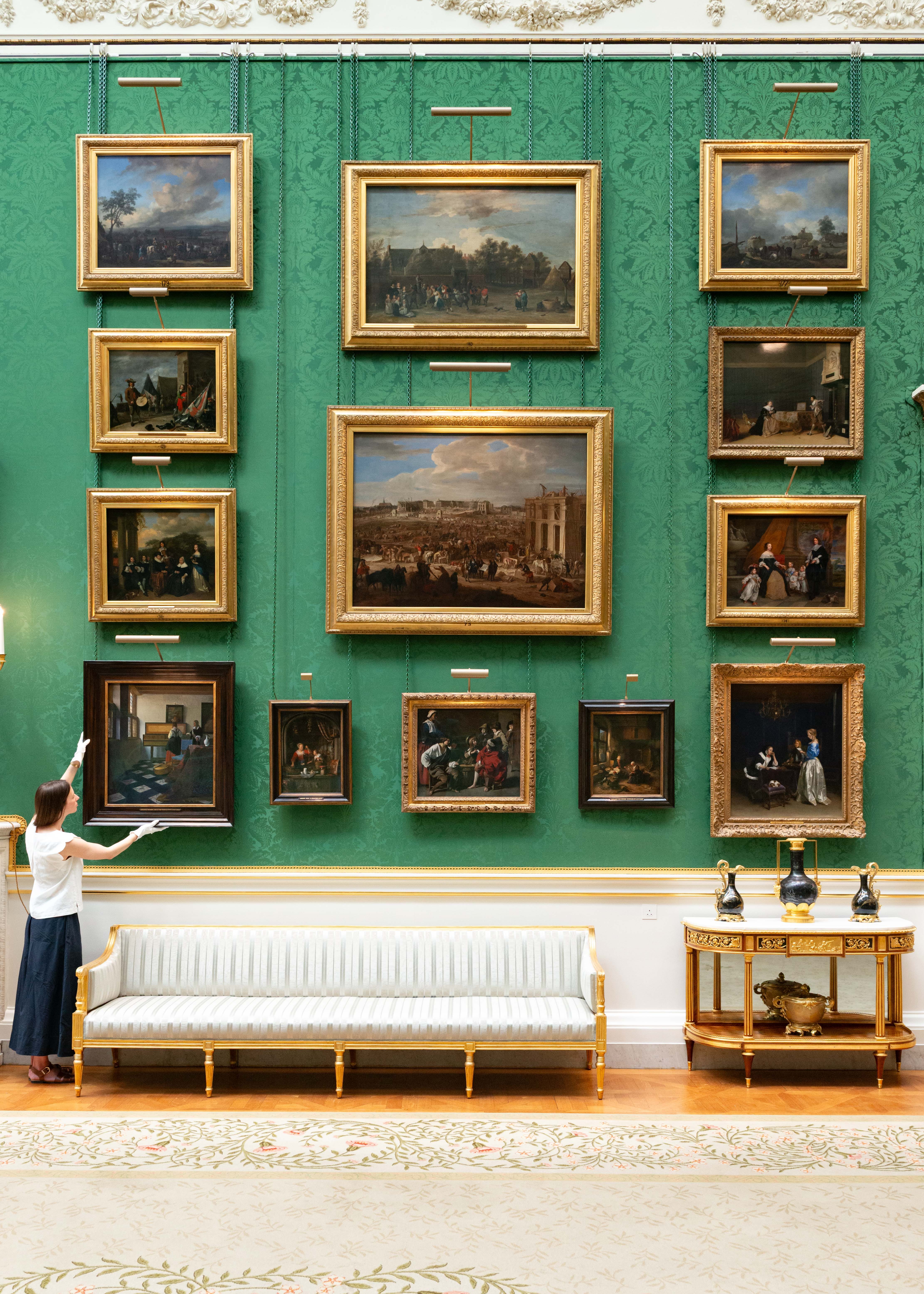
The paintings may be up to four deep on the walls, but the best are at eye level. The paintings are displayed broadly by era and school. So five out of the collection’s six Rembrandts are hung together, as are 12 scenes of Venice by Canaletto, and seven Rubens, including his Self Portrait and his portrait of Anthony Van Dyck, which used to be displayed together in the old Whitehall Palace in the 1660s.
The below timelapse of the transformation shows the pictures being removed, then the old, faded pink silk wall covering (revealing an older olive green silk that dates back to 1914, which is left in place). The deep plaster frieze is painted a soft ivory. Then the old silk is covered with a white covering to provide softness and dimension to the wall when the new emerald green silk damask is put up. Then, the pictures are hung by chains to picture rails.
The Picture Gallery was built by John Nash as he transformed Buckingham House into Buckingham Palace for King George IV to display his monumental art collection. Over the decades, the colour of the walls has changed dramatically, from golden yellow when the gallery opened in 1825, then lilac, and finally crimson red before the last major architectural alteration to the Picture Gallery took place in 1914. It was in need of repair – John Nash’s ceiling of hammer beams, arches, and small glass domes leaked and didn’t cast enough light onto the treasures being displayed. So a new segmented glass ceiling was installed, along with the deep frieze featuring floral swags made of plaster. A dense arrangement of pictures was hung on walls covered with olive-green silk damask.
During the mid-20th century, the dense hanging of paintings gave way to a more fashionable minimalist style (well, minimalist palace style). In 1976, a coral pink velvet wall covering was installed. After 50 years, it had deteriorated to the point that it needed to be replaced with emerald green silk damask. The timing fits as the palace is undergoing a much-needed renovation.
The doubling of the artwork means a chance to reintroduce paintings to the public that haven’t gotten the attention they might deserve. One such work is The Tribuna of the Uffizi by Johan Zoffany. Though commissioned by Queen Charlotte, wife of George III, it was never hung in her apartments, reportedly because its composition of a crowded salon was too unconventional.
In addition to a surfeit of Old Masters, the Picture Gallery now contains some of the Royal Collection’s best examples of British art, including A Rough Dog by George Stubbs, which is believed to represent George IV’s own dog, and Thomas Gainsborough’s portrait of Johann Christian Fischer.