

A very personal message from the King
Charles III promotes early cancer screenings: 'Early diagnosis quite simply saves lives'
Note: I’ve postponed my next “The year in royal work” post to deal with this breaking news from Buckingham Palace. I’ll post it in a few days.
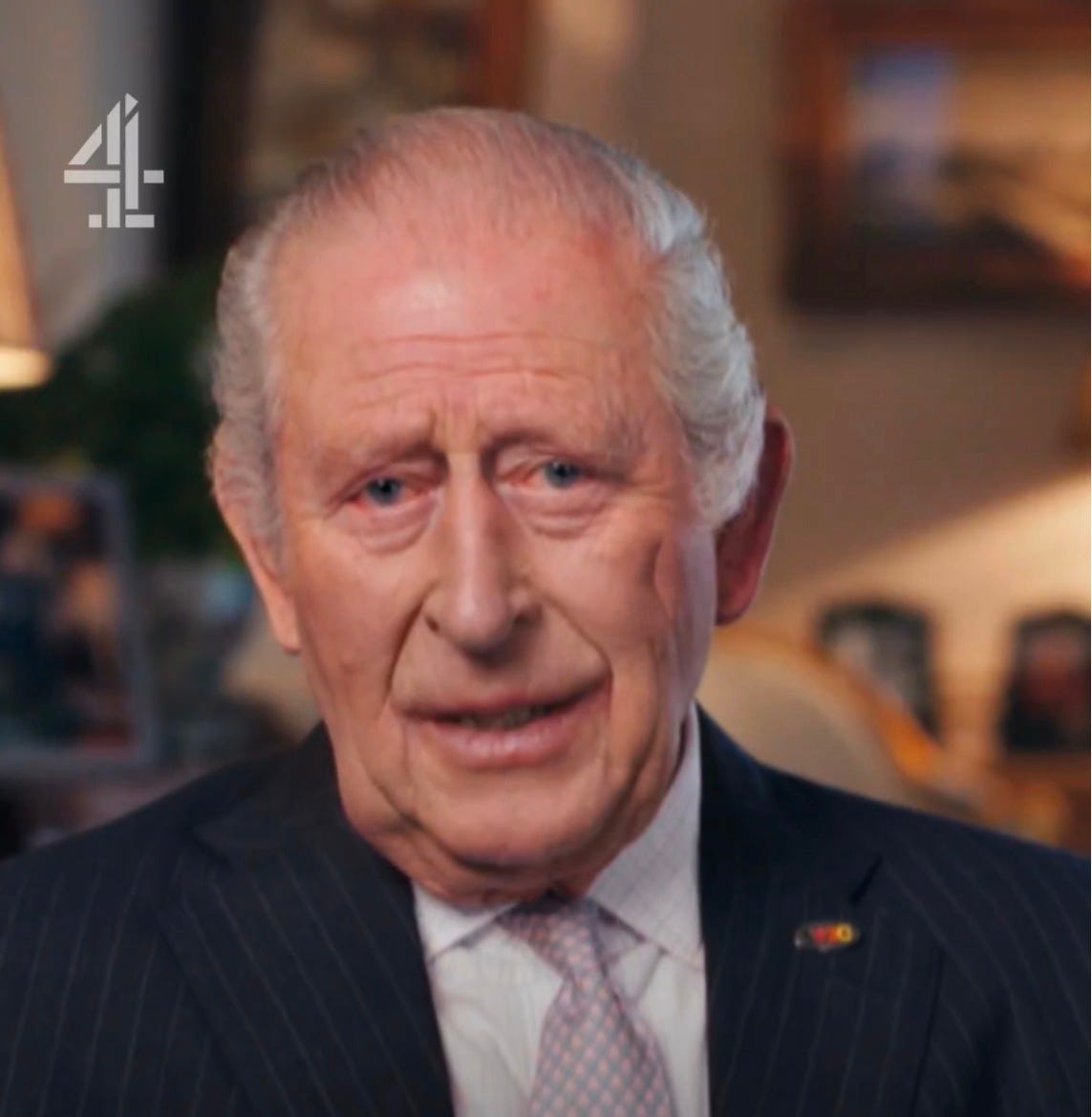
At 8 p.m. on Friday, December 12, King Charles III updated his own cancer situation on Channel 4’s Stand Up To Cancer program in a revealing and personal message.
In his five-and-a-half minute message, the King revealed a positive update on his own cancer experience:
Today I am able to share with you the good news that thanks to early diagnosis, effective intervention and adherence to “doctors’ orders,” my own schedule of cancer treatment can be reduced in the New Year. This milestone is both a personal blessing and a testimony to the remarkable advances that have been made in cancer care in recent years; testimony that I hope may give encouragement to the fifty percent of us who will be diagnosed with the illness at some point in our lives.
The video had been recorded in late November so no one expected to hear bad news as that was bound to have leaked out well ahead of the airing of the program, which focused on early detection of cancer.
That his treatment — believed to have been weekly radiation — is being reduced on the advice of doctors is the first real good news regarding King Charles III’s health in nearly two years. In early 2024, tests done while in hospital to undergo surgery for an enlarged prostate revealed that he had cancer (the type of cancer has never been revealed, but the palace did confirm that it was not prostate cancer).
What is notable is the new wording regarding his treatment: “His Majesty has responded exceptionally well to treatment and his doctors advise that ongoing measures will now move into a precautionary phase [emphasis mine],” a palace spokesperson said. “This position will be continuously monitored and reviewed to protect and prioritize his continued recovery. As the King has said, this milestone on his recovery journey is “a great personal blessing.”’
Though his schedule was reduced in 2024, he’s increased his pace this year to the point that not only is he the hardest working royal in terms of the number of engagements, but he set a busier pace than he’d done in recent years.
Advice from the palace seems to hint that 2026 could be busier than ever: “The King has taken great comfort and encouragement from being able to continue leading a full and active life throughout his treatment, while always heeding the advice of his medical team. His ability to uphold all of his state duties, and to continue with public engagements and overseas tours, has helped greatly with the positive mindset that, as many families will know, is such a vital a part of the recovery journey.”
As for why the King is now offering new information, as well as comfort, sympathy, and understanding to those dealing with cancer as well as their families and friends, it’s a case of leading by example. He’s the royal patron of Cancer Research UK, which is backing the launch of a new online screening tool in Britain and wants to ensure news of this new screening method reaches as many people as possible.
As the palace explains, “In sharing some details of his treatment journey, His Majesty has been greatly encouraged by the outpouring of support both from the medical community and from members of the public —especially those affected by cancer. They have often been kind enough to express how the King’s example has helped to improve public understanding, to encourage conversations around difficult topics, to destigmatize the treatment journey, and to educate those at risk about the importance of early diagnosis. … This seemed a fitting moment to provide a brief update on the positive trajectory of his own continued recovery.”
In particular, the monarch noted that at least nine million people in Britain are behind in the available cancer screenings. The odds of successful treatment often depend on swift detection. As the King said, “The statistics speak with stark clarity. To take just one example: When bowel cancer is caught at the earliest stage, around nine in ten people survive for at least five years. When diagnosed late, that falls to just one in ten.”
The old saying, an ounce of prevention is worth a pound of cure, doesn’t always convince people to be proactive in terms of their health. “People avoid screening because they imagine it may be frightening, embarrassing or uncomfortable,” explains the King, sounding more like a grandfather trying to convince a loved one, rather than a head of state making a pronouncement. “A few moments of minor inconvenience are a small price to pay for the reassurance that comes for most people when they are either told either they don’t need further tests, or, for some, are given the chance to enable early detection, with the life-saving intervention that can follow.”
Charles’s promotion of the screening tool is similar to when his mother advocated for the COVID-19 vaccine during the pandemic, telling of her own experience: “The jab — it didn’t hurt at all.”
The King’s message is simple yet powerful: “Early diagnosis quite simply saves lives.”
My latest Royal Roundup on Global’s The Morning Show (December 8, 2025)